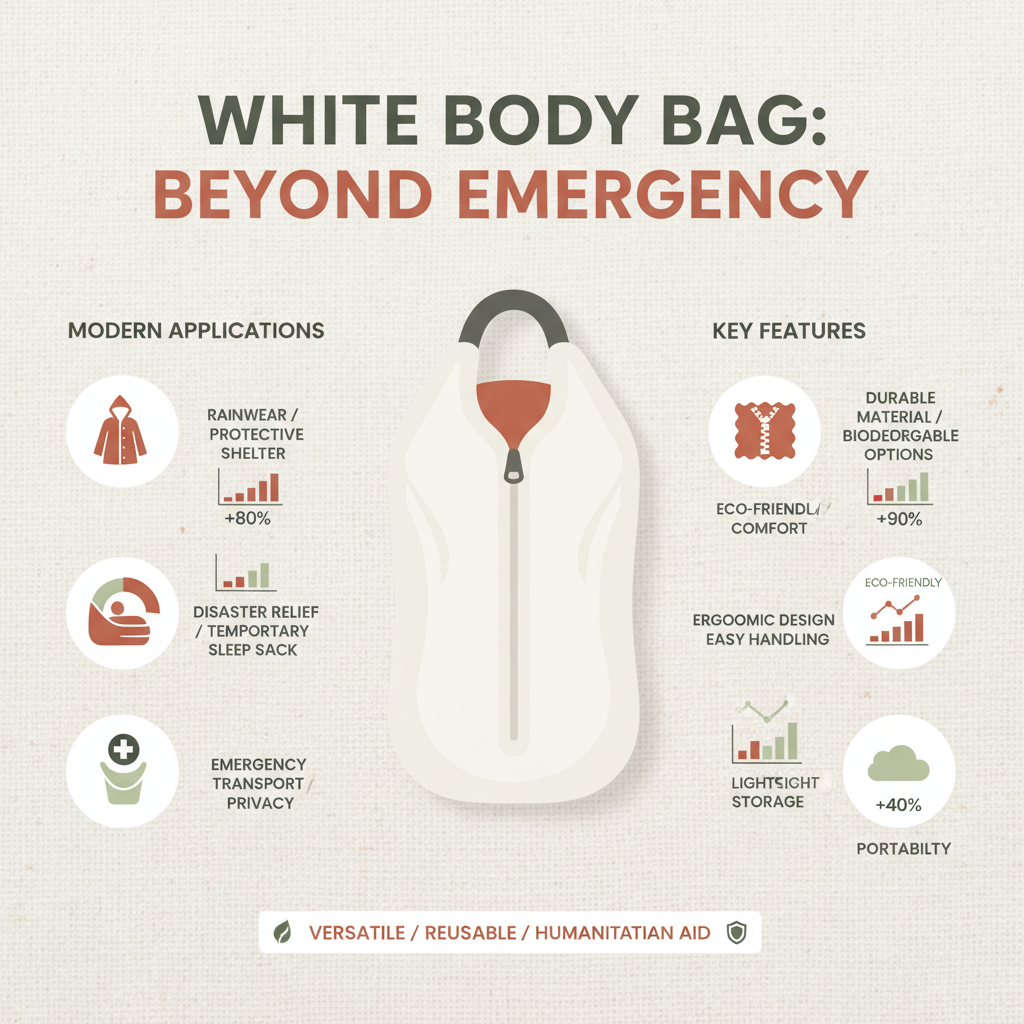
The demand for reliable and dignified handling of remains is a global concern, extending beyond medical and forensic contexts to disaster relief and humanitarian efforts. A crucial component in this process is the white body bag, often overlooked yet fundamental in maintaining respect, ensuring safety, and complying with stringent regulations. Understanding the specifications and applications of these bags is vital for organizations and professionals operating in sensitive environments.
In industries ranging from healthcare and mortuary services to disaster response and forensic science, a standardized and reliable system for handling remains is paramount. The white body bag represents this crucial system, serving as a primary containment unit. Its design and materials directly impact the integrity of evidence, the safety of personnel, and the ethical treatment afforded to the deceased.
The increasing frequency of global crises, coupled with growing awareness of biohazard safety and forensic best practices, has driven the demand for high-quality white body bag. Effective procurement and understanding of these specialized products are now integral to preparedness and response capabilities worldwide.
The Significance of White Body Bags in Modern Practices
The use of white body bags isn't merely a logistical requirement; it's a critical element in upholding ethical standards and ensuring public safety. Their significance stems from their ability to contain biohazards, preserve forensic evidence, and provide a dignified means of transporting remains. Modern practices increasingly demand compliance with international standards regarding handling potentially infectious materials, making the selection of appropriate body bags a non-negotiable aspect of operational readiness.
Historically, improvised methods were often used, leading to risks of contamination and compromising the integrity of investigations. The evolution towards standardized white body bags reflects a growing commitment to professionalism, accountability, and the respect owed to the deceased.
Defining White Body Bags: Function and Context
A white body bag is a sealed, leak-proof container specifically designed for the secure and respectful transport of human remains. Typically constructed from durable, puncture-resistant materials like polyethylene or PVC, these bags are intended to contain fluids, prevent the spread of infection, and protect the body from further damage or degradation. The “white” designation often signifies a standard, non-specialized model, distinguishing it from colored bags used for specific purposes (e.g., infectious disease containment).
The context in which these bags are employed is broad, spanning forensic investigations, disaster victim identification (DVI), medical examiner offices, and mortuary services. In forensic science, the white body bag serves as a vital link in the chain of custody, preserving crucial evidence like trace materials and DNA.
Beyond the immediate containment function, the use of a standardized bag contributes to a more organized and efficient workflow, facilitating documentation and logistical processes. It demonstrates a commitment to best practices and adherence to legal and ethical guidelines.
Core Characteristics of Quality White Body Bags
Several core characteristics define a high-quality white body bag. First and foremost is its material strength; the bag must be resistant to punctures, tears, and abrasions to prevent leakage and maintain containment during handling and transport. A secure closure system, typically involving multiple zippers or ties, is also essential to ensure a complete seal.
Beyond durability, key features include adequate capacity to accommodate a range of body sizes, handles for easy lifting and carrying, and clear labeling areas for identification and tracking. Some models incorporate features like absorbent padding to manage fluids and integrated straps for securing the body within the bag.
Compliance with relevant standards – such as those set by organizations like the CDC or ISO – is a crucial indicator of quality. These standards dictate requirements for material composition, leakage resistance, and overall performance, ensuring that the white body bag meets stringent safety and efficacy criteria.
Global Applications and Industry Standards for White Body Bags
The applications of white body bags are globally consistent, though specific regulatory requirements may vary by region. In forensic pathology, they are used to transport bodies from crime scenes to morgues, preserving evidence for investigation. Medical examiner offices utilize them for transporting deceased individuals from hospitals or homes to autopsy facilities.
Disaster victim identification (DVI) teams rely heavily on white body bags in mass fatality incidents, ensuring the organized and respectful recovery and identification of remains. These bags play a critical role in maintaining the chain of custody and facilitating accurate forensic analysis. In remote industrial zones where accidents may occur, providing appropriate containment is crucial.
Industry standards are largely guided by international bodies and national regulations. The United Nations guidelines for the handling of human remains emphasize the importance of dignity and respect, and implicitly support the use of appropriate containment measures like body bags. ISO standards often define requirements for material properties and performance testing.
Comparative Analysis of White Body Bag Features
The Advantages of Using White Body Bags
The advantages of utilizing white body bags extend beyond mere containment. They offer significant benefits in terms of safety, efficiency, and ethical considerations. The primary advantage is the reduction of biohazard risk, protecting personnel from potential exposure to infectious agents.
Furthermore, they streamline the logistical process of handling remains, ensuring a more organized and efficient workflow. The use of standardized bags also contributes to maintaining the chain of custody, crucial for forensic investigations.
Future Trends and Innovations in Body Bag Technology
Innovation in white body bag technology is focusing on enhancing material science and integrating smart features. Research is underway to develop biodegradable and compostable materials, reducing the environmental impact of disposal.
Another emerging trend is the integration of RFID tags or QR codes for improved tracking and identification. These technologies can provide real-time location data and facilitate a more efficient chain of custody.
Future developments may also include self-sterilizing materials and advanced containment systems, offering enhanced protection against biohazards and improving overall safety.
Challenges and Solutions in White Body Bag Implementation
Despite their widespread use, challenges remain in the effective implementation of white body bag protocols. One common issue is ensuring adequate training for personnel on proper handling and disposal procedures.
Another challenge lies in maintaining a consistent supply of high-quality bags, particularly in resource-constrained settings. Effective procurement strategies and establishing reliable supply chains are crucial for addressing this issue.
Addressing these challenges requires a collaborative approach involving training programs, standardized protocols, and investment in infrastructure to support proper handling and disposal.
Summary of Key Considerations for Effective White Body Bag Implementation
| Training Adequacy |
Supply Chain Reliability |
Material Quality |
Disposal Protocol Compliance |
| Regular, comprehensive training programs for all personnel involved. |
Establishing diverse and resilient supply chains to prevent shortages. |
Ensuring bags meet or exceed relevant international standards for durability and leakage resistance. |
Strict adherence to local and international regulations regarding the disposal of biohazardous materials. |
| Assessment of training effectiveness through periodic drills and evaluations. |
Maintaining strategic reserves of bags to accommodate emergency situations. |
Regular quality control checks to verify material integrity and performance. |
Proper documentation of disposal procedures to maintain accountability. |
| Focusing on best practices for handling and minimizing exposure risks. |
Diversifying suppliers to mitigate the risk of disruptions. |
Considering biodegradable or compostable materials to reduce environmental impact. |
Utilizing designated disposal facilities and adhering to proper segregation protocols. |
| Incorporating scenario-based training to prepare for real-world incidents. |
Implementing inventory management systems to track stock levels and predict future needs. |
Exploring innovative materials with enhanced barrier properties and resistance to degradation. |
Implementing a waste management plan that prioritizes environmental sustainability. |
| Providing refresher courses to maintain competency and address evolving best practices. |
Negotiating long-term contracts with reliable suppliers to ensure stable pricing and availability. |
Investigating the potential for integrating smart technologies like RFID tags for improved tracking. |
Adhering to all applicable local, national, and international regulations regarding biohazard waste disposal. |
| Documenting all training activities and maintaining records of personnel certification. |
Conducting regular audits of supply chain performance to identify potential vulnerabilities. |
Promoting continuous improvement through research and development of more effective body bag technologies. |
Collaborating with waste management professionals to ensure responsible and compliant disposal practices. |
FAQS
While both types provide containment, those designed for infectious disease typically feature thicker, more impermeable materials, reinforced seals, and may include antiviral or antibacterial coatings. They often undergo more rigorous testing to ensure they meet specific standards for biohazard resistance, exceeding the requirements of standard white body bags. The sealing mechanisms are also more robust, often involving multiple layers and specialized closures.
White body bags should be stored in a cool, dry, and clean environment, away from direct sunlight and extreme temperatures. They should be kept in their original packaging until needed to protect them from punctures, tears, and contamination. Avoid storing them near chemicals or other materials that could compromise their integrity. Regular inspections should be conducted to ensure no damage has occurred.
Always follow the manufacturer's instructions for closing and sealing the bag. Typically, this involves carefully positioning the body, ensuring all limbs are contained, and then securely fastening all zippers or ties. Multiple layers of closure are often recommended for added security. After sealing, inspect the bag for any leaks or damage. Proper personal protective equipment (PPE) should be worn throughout the process.
Yes, disposal is heavily regulated. White body bags and their contents are typically considered biohazardous waste and must be disposed of in accordance with local, national, and international regulations. This often involves incineration, specialized landfill disposal, or other approved methods. Proper documentation of the disposal process is crucial for compliance.
The material significantly impacts performance. Polyethylene offers good puncture resistance and is cost-effective, while PVC provides a higher level of impermeability. Specialized materials with antiviral coatings enhance protection against infectious agents. The choice of material should be based on the specific application and the level of risk involved. Higher-risk scenarios demand more robust and impermeable materials.
For DVI, prioritize bags with clear labeling areas for detailed identification information, robust closure systems to maintain the chain of custody, and materials that preserve forensic evidence. Consider bags with integrated straps for easy handling and transport in challenging environments. Durability is paramount, as bags may need to withstand rough handling and prolonged storage.
Conclusion
In conclusion, the white body bag is far more than a simple container; it is a critical component in upholding ethical standards, ensuring public safety, and facilitating effective responses to emergencies. Understanding its features, applications, and the evolving landscape of best practices is essential for professionals across diverse industries. Proper selection, handling, and disposal are paramount to maximizing its benefits and minimizing risks.
Looking ahead, continued innovation in materials, design, and technology will further enhance the functionality and sustainability of these vital products. Embracing these advancements and prioritizing comprehensive training and robust protocols will ensure that the white body bag remains a cornerstone of responsible and dignified handling of remains worldwide. Visit our website to learn more: www.heleegarment.com